Commercial Boiler Hire
A temporary boiler keeps an office, school, care home or block of flats warm while the permanent plant is replaced, repaired or simply cannot cope. Hire is priced per week by each firm, so tell us the building and we find one that covers it.
Is a hire boiler the right answer?
Most commercial hires fall into one of a few situations. Here is what tends to work in each.
| Situation | What usually works |
|---|---|
| Planned replacement of the boiler plant | Book the hire for the works, plus a margin for overrun. Schools often do this over the summer holidays. |
| Boiler failed in cold weather | A unit connected to the existing pipework, as soon as access and power allow. See emergency hire. |
| Plant too small after an extension | A unit run alongside the existing boilers while a permanent upgrade is designed. |
| Hot water failed but heating works | A smaller unit or an electric boiler feeding the hot water cylinder or calorifier. |
If you are not sure which of these you are in, say so in the form. The hire firm will ask the right questions on its visit.
Size it before you ask
Our calculator turns floor area, height and insulation into a rough load and the next standard hire size up. No prices, just the size.
Open the sizing calculatorHire firms price per week, often with a one-week minimum, plus delivery, connection and fuel. How hire is priced.
Why a cold building is urgent
It is easy to think of heating as comfort. For an employer it is also a legal duty. The Workplace (Health, Safety and Welfare) Regulations 1992 say workrooms must be a reasonable temperature, and the Approved Code of Practice says that normally means at least 16 °C, or 13 °C where the work involves severe physical effort (HSE).
In other words, an office or classroom that drops well below that through a cold week is a problem you have to solve, and a hire boiler is usually the fastest way to keep the building open.
Sizing the unit
The quickest guide is the rated output on the data plate of the boiler you are replacing. If you cannot get to it, our boiler sizing calculator gives a rough figure from floor area, ceiling height and insulation. Hire fleets keep set sizes, so the result is rounded up to the next one.
For larger buildings it is often worth asking about two smaller units instead of one big one. If one trips, you are not back to a cold building.
Connection, fuel and who does the work
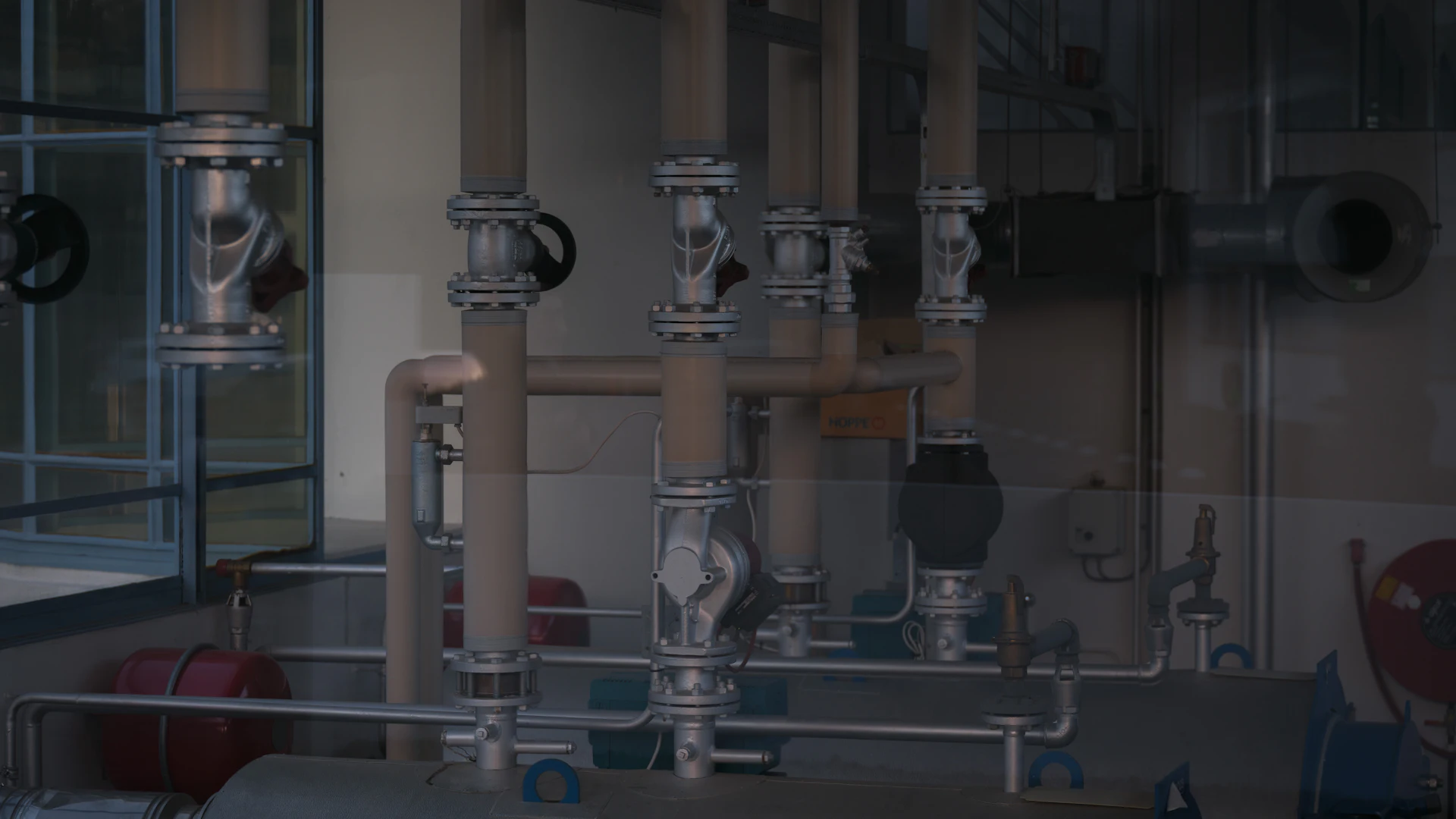
A hire boiler normally stands outside on a trailer or in a container, and joins the building's heating through flexible flow and return hoses. If your plant room already has valved connection points for a temporary boiler, a later hire is much quicker to set up. If it doesn't, ask the hire firm about fitting them while the unit is connected.
On gas, the law is simple: anyone carrying out gas work for gain has to be on the Gas Safe Register (Gas Safety (Installation and Use) Regulations 1998, regulation 3). For commercial plant, ask to see that the engineer's card covers non-domestic work. Oil-fired units come with a fuel tank, and at business premises in England a tank over 200 litres needs a bund, which we cover in our post on oil tank rules.
Hot water and Legionella
If the hire boiler also heats a hot water cylinder or calorifier, the temperatures matter. HSE guidance is to store hot water at 60 °C or higher and to distribute it so it reaches at least 50 °C at outlets, or 55 °C in healthcare premises (HSE). A temporary set-up that runs the cylinder cooler for weeks can undo a good water hygiene regime, so tell the hire firm if the unit will heat water as well as radiators.
Schools, councils and public bodies
Do you buy through a framework or a tender? Many public bodies advertise temporary boiler hire as a contract notice on Contracts Finder. If you need a quote to set a budget before the formal process, say so in your request and the firm will price on that basis.
How the hire usually runs
Survey
The firm checks the plant room, the access for a trailer or container, the fuel and the power.
Delivery and connection
The unit is placed, joined to flow and return, filled, and commissioned by the right engineer.
Running
You run the building as normal. The firm services the unit during longer hires.
Off-hire
Once the permanent plant is back, the unit is drained down, disconnected and collected.
Commercial Boiler Hire: common questions
How quickly can a temporary boiler be connected?
It depends on access, the size of unit, the fuel and whether the building already has connection points for a hire boiler. Pre-fitted connection points make a big difference. We do not promise a time; the hire firm tells you once it knows the site.
Who connects a temporary gas boiler?
A Gas Safe registered engineer. For commercial premises the engineer's registration should cover non-domestic gas work (HSE gas safety for employers).
Can a hire boiler run alongside our existing boilers?
Often, yes. Where one boiler in a bank has failed, or the plant is undersized, a hire unit can be connected to share the load. The hire firm will check how the controls and pumps work together.
Where does the unit stand?
Usually outside, close enough to the plant room for the hoses to reach. It needs a firm, level standing, room for the flue to discharge safely and access for delivery. Containerised units may need a crane.
Do we pay for fuel?
Yes, in most hires. You pay for the gas or electricity used, or for the oil delivered to the unit's tank. Fuel is separate from the weekly hire charge.
How long can we hire for?
From a week or so to a whole heating season. A one-week minimum is common. Longer hires usually include servicing visits.
Keep reading
Tell us what needs heating
We find a boiler hire firm that covers your site and give you their name before any of your details go to them. It costs you nothing.
What happens next
- We look for a hire firm that covers your postcode and the size of unit you need.
- We give you the firm's name first. Your details only go to them if you say yes.
- The firm checks the site, confirms the size and sends a written price.
Boiler Hire Company is an independent matching service, not a hire firm. If you hire through the firm we name, they pay us a fee; you pay us nothing.
Thanks. Your request is with us.
- We get back to you by email or phone, naming a hire firm that covers your site.
- Say yes and we send them your details. Say no and they never see them.
- The firm confirms the unit size and connection on a survey and puts its price in writing. We send no marketing.